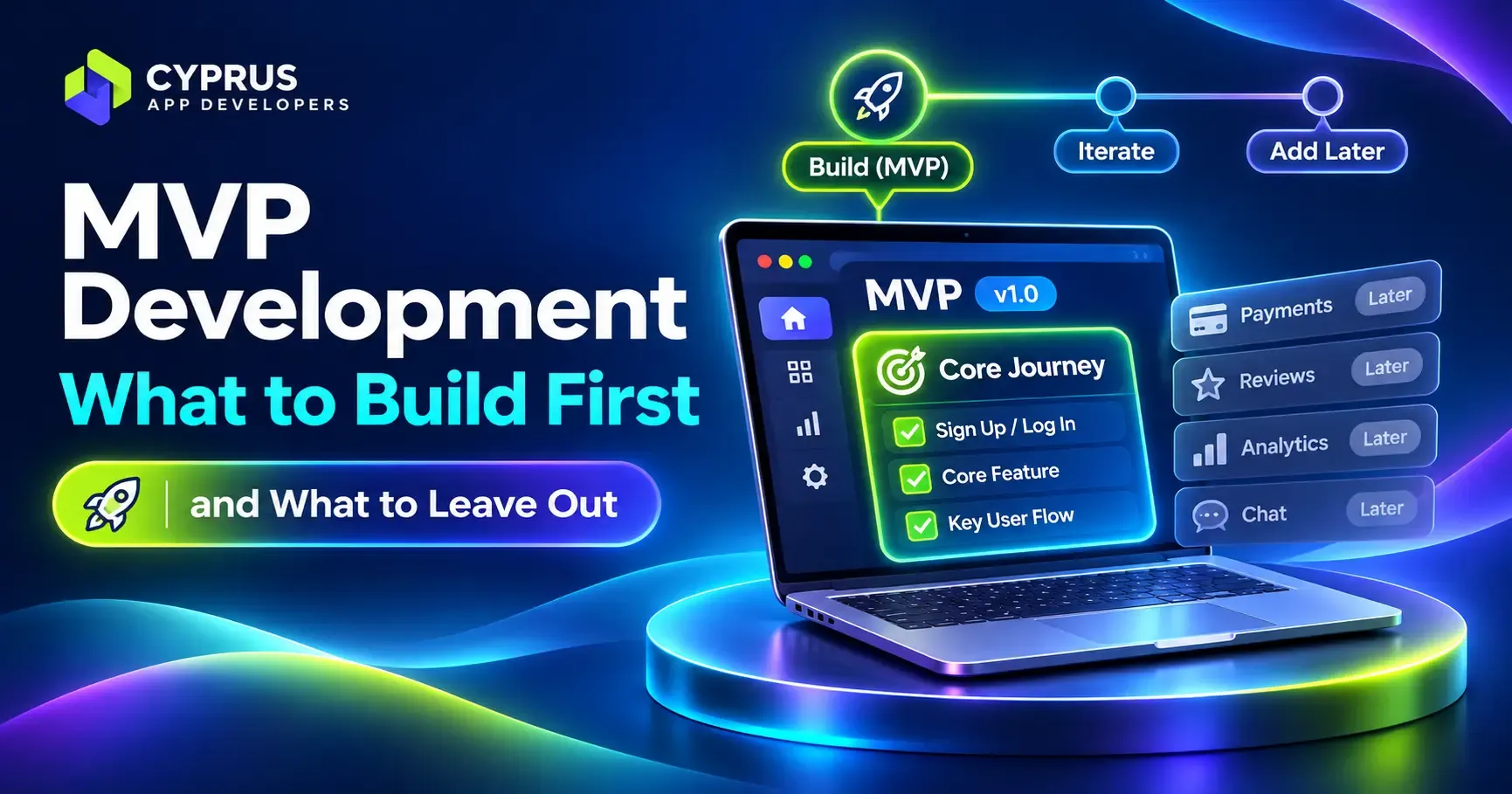
An MVP, or minimum viable product, is the smallest working version of your product that real people can use and give you honest feedback on. The point of MVP development is not to build a cut-down app. It is to find out, as quickly and cheaply as you can, whether you are building the right thing.
To plan one: pick the single problem you are solving, build only the one journey that solves it, put it in front of real users within weeks, and let what they actually do decide what you build next. The rest of this guide shows you how, including what to leave out, which is where most of the saving is.
The short version
- An MVP is the smallest version that lets real users do the one thing your product exists for.
- It is a test of an idea, not a cheaper copy of the finished app.
- Decide what to leave out first. Every extra feature costs money and slows down what you learn.
- Start with a web app unless you need what only a phone can do.
- Agree what you want to learn, and what result would make you carry on, change direction or stop, before anyone builds anything.
- It usually costs a fraction of a full build and takes weeks or a few months, not a year.
What is an MVP? (the meaning in plain English)
Wikipedia defines a minimum viable product as “a version of a product with just enough features to be usable by early customers” who “can then provide feedback for future product development”. The term was coined by Frank Robinson in 2001 and later popularised by Steve Blank and Eric Ries.
Taking the three words one at a time: minimum means the least you can build, viable means it works well enough for people to use it for real, and product means something people actually use, not a slide deck or a set of screen designs.
People use these terms loosely, so it helps to see how an MVP differs from the things it gets confused with:
| Stage | What it is | What it tests | Who uses it |
|---|---|---|---|
| Prototype | Screens that look like the product, often clickable, with little or nothing behind them | Whether the idea and the flow make sense | You and a few testers |
| Proof of concept | A technical experiment | Whether it can be built at all | Your developer |
| MVP | A working product with the one core journey | Whether real people want it and use it | Real users |
| First full version | The product you launch after what you learned | Whether it can grow | Everyone |
Do you need an MVP?
Probably yes if the idea is new, you are not sure people will use or pay for it, or you want to learn before spending a large budget.
Probably not if you are replacing a process you already know inside out, such as an internal tool for your own team where the requirements are clear. You should still build in phases, but you do not need to test whether anyone wants it.
How to decide what goes in your MVP
- Name the problem and the person. Write one sentence: who struggles with what, and how your app helps.
- Describe the one journey. The single path a user takes from arriving to getting the value, for example: sign up, book a session, get a confirmation.
- List every feature you can think of. Nothing is rejected at this stage.
- Sort the list. A simple method is MoSCoW: must have (the journey does not work without it), should have (important but not vital), could have (nice to have) and won’t have this time. Everything that is not a must-have stays out of the MVP. Some guides suggest that if you still have more than five or six must-haves, you have lost focus.
- Decide what you want to learn. Write one question and the result that would count as a yes, for example: “Will trainers take bookings through the app instead of by message?”
An example (illustrative, not a client project): a booking app for independent personal trainers.
| Must have | Should have | Could have | Won’t have this time |
|---|---|---|---|
| Client sign-up Trainer’s availability calendar Book a session Confirmation email |
Reminders Cancel or reschedule |
Taking payment in the app Reviews and ratings |
Group classes Several trainers per account Custom branding iPhone and Android apps |
What to leave out (and what to do instead)
- Several types of user. Start with one. In the example, build it for the trainer or the client, not both.
- Online payments. Take payment by a link or in person at first. Add built-in payments once people are using the product and paying.
- An admin dashboard. Manage things in a spreadsheet or directly in the database behind the scenes.
- Design polish. Keep it clean, simple and consistent. Polish comes later.
- Separate iPhone and Android apps. Build one web app, or one cross-platform build. Native apps for both phones roughly double the cost, according to Clutch.
- Integrations with other systems. Move the data by hand until it is clear the connection is worth building.
- Automating everything. A person doing a task by hand behind the scenes can stand in for a feature while you find out whether anyone wants it. Some MVP guides recommend exactly this.
What not to cut: basic security, data protection (if people in the EU use your app, GDPR can apply, and this is general information, not legal advice), the reliability of the core journey, and a way to measure the thing you want to learn.
Web app, mobile app or something else?
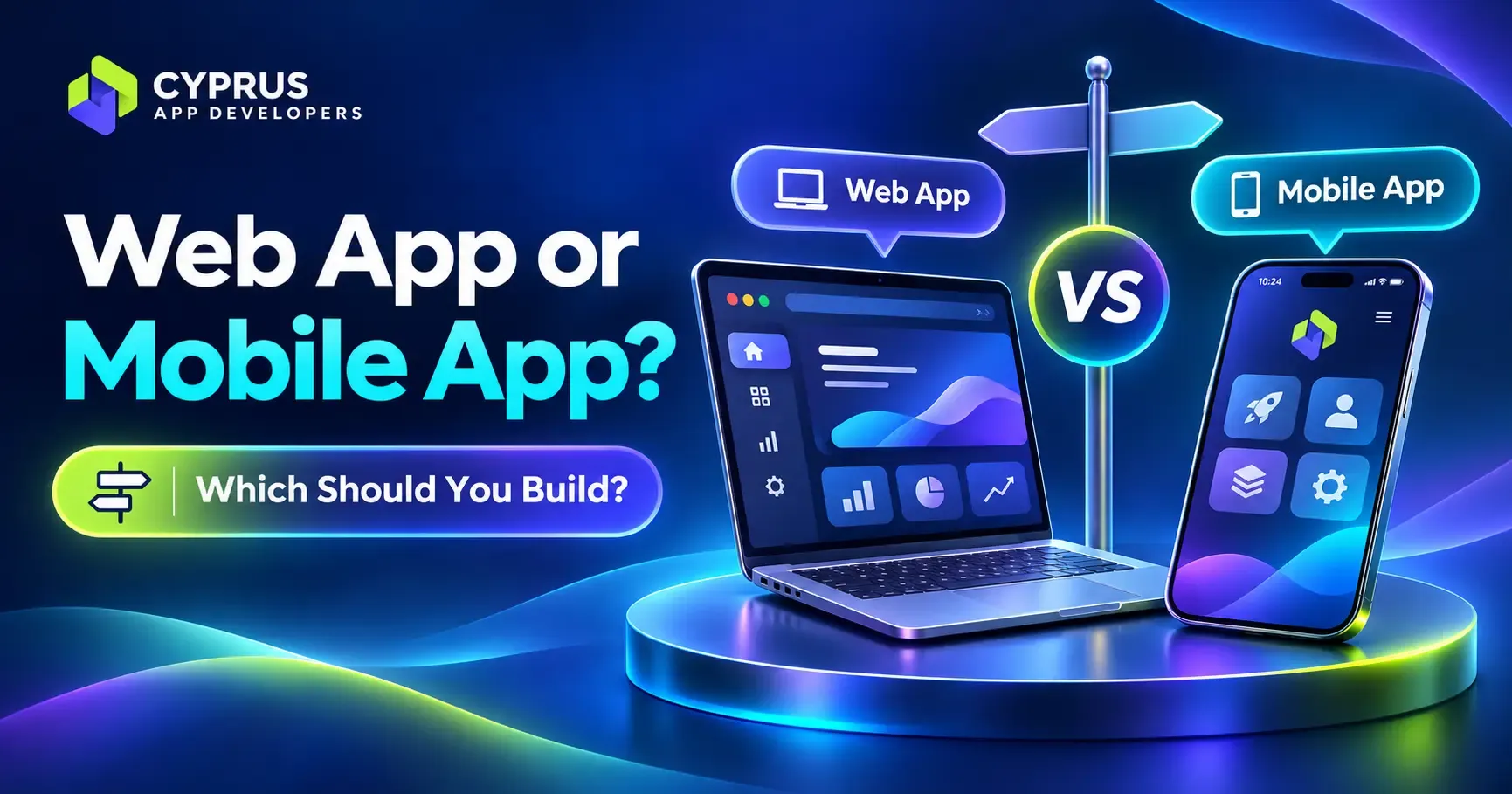
For most MVPs a web app is the sensible start: one build works on every device, there is no app store approval, and changes go live straight away. A mobile app makes sense when the product depends on things like push notifications, offline use or the phone’s camera and location. We cover how to choose in our guide to web app or mobile app: which should you build?
What does MVP development cost, and how long does it take?
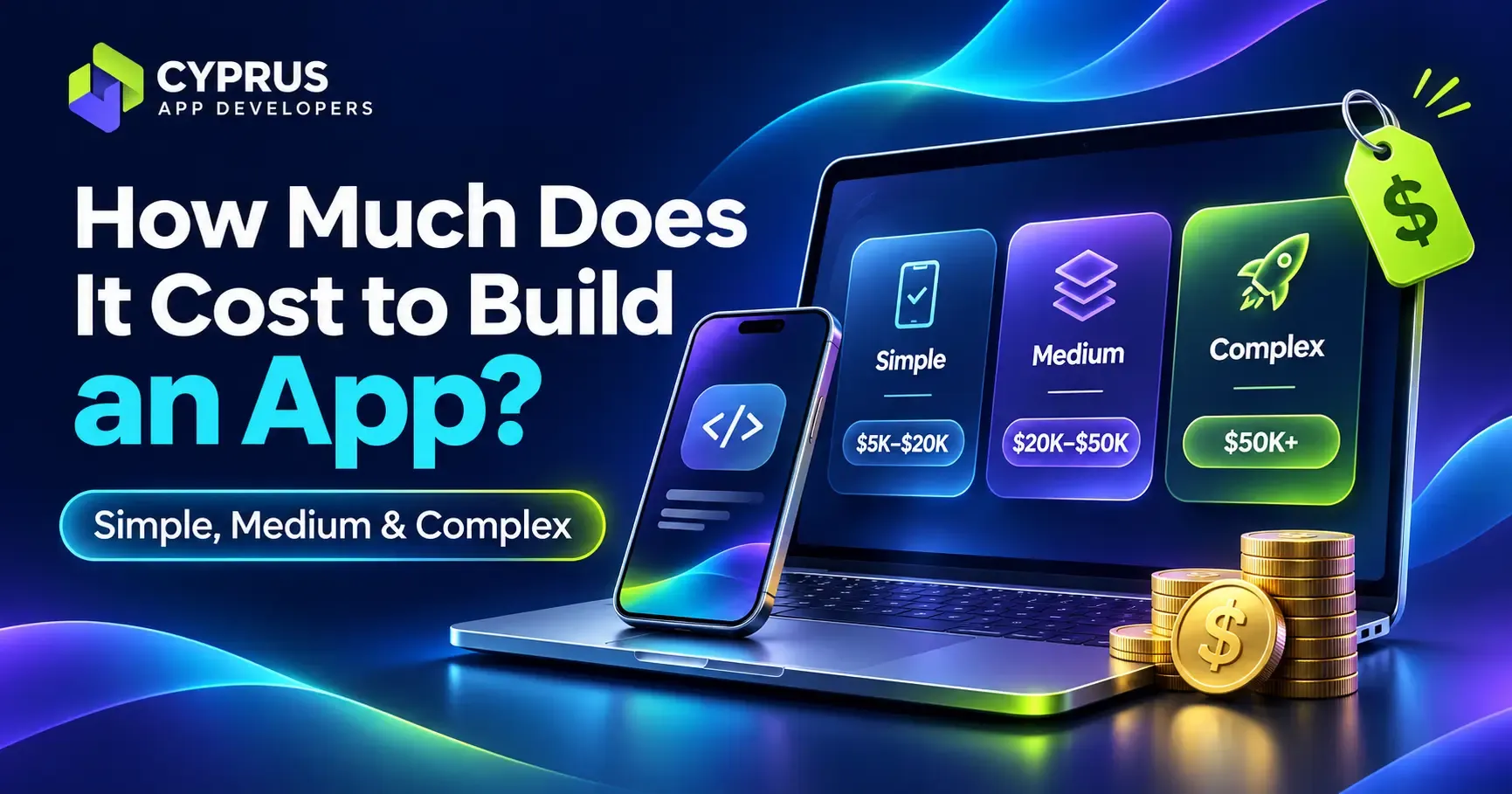
Agency guides put a simple app or first version at roughly $15,000 to $50,000, with individual guides ranging from about $12,000 to $60,000, and timelines of one to three months. One guide describes a simple web tool as taking six to ten weeks with a team of one or two. These are market prices for agencies in places like the US and Western Europe, in US dollars.
Two things drive the number more than anything else: how many features you include and how many platforms you build for. That is why deciding what to leave out matters so much. Our guide to what it costs to build an app explains why quotes differ so much and what to expect at each size.
At Cyprus App Developers, we keep MVP costs down with a small team, no large overheads and AI writing most of the code. Depending on the size and scope of your project, an MVP can start from $5,000. A small, focused first version sits at that end, and more features, platforms or integrations add to the price.
How to test your MVP
- Put it in front of the right people. Real users in the group you are building for, not friends and family who will be kind.
- Watch what they do, not just what they say. Do they finish the journey? Do they come back?
- Measure the one thing you decided to learn. For the trainer example, that is how many bookings are made through the app.
- Talk to a handful of users to understand why they did or did not use it.
- Decide. Carry on and build more, change direction, or stop. Stopping early is a good result if it saved you the cost of the full build.
Mistakes to avoid
- Building too much. The most common mistake, and the most expensive one.
- Skipping the conversations. Talk to the people you are building for before you build, as well as after.
- Having no success measure. If you did not decide what a good result looks like, any result can look like a win.
- Treating the code as throwaway when it will grow. Make sure you own the code and that it is built so another developer could carry on.
- Ignoring data protection. It is much cheaper to plan for it from the start than to add it later.
- Choosing a developer on price alone. Our guide to how to hire an app developer covers what to ask first.
MVP development for startups: how we work
If you are a startup, the first phase of a project is usually the MVP, and it is what our MVP development service covers. At Cyprus App Developers:
- We quote a fixed price after we have written a proper specification with you, so you know exactly what you are getting.
- We use AI to write most of the code, and we say so up front. Everything is tested hands-on with you at every stage.
- If you want extra assurance, we offer an optional independent developer sign-off, priced separately.
- You own what you pay for: your code, your documentation and your options. Read more on our app ownership page.
- With 30+ years in real-world business and marketing, we ask about your business as well as your app.
Frequently asked questions
How long does it take to build an MVP?
It depends on what is in it. The agency guides we reviewed suggest one to three months for a simple first version. The fewer features you include, the faster it gets in front of users.
How much does MVP development cost?
For agencies in the US and Western Europe, simple first versions are typically quoted at roughly $15,000 to $50,000. See our cost guide for what drives the price up or down. Our MVPs can start from $5,000, depending on size and scope.
Can I build an MVP without a developer?
Sometimes. No-code tools can be a quick, cheap way to test a simple idea. The trade-offs are limits on how far you can customise it, and that you may need to rebuild it if the idea works and grows.
Is a landing page an MVP?
Not quite. A landing page can test whether people are interested before you build anything, which is a useful and cheaper first step. An MVP is a working product people can actually use.
What is the difference between an MVP and a prototype?
A prototype shows what the product would look like. An MVP actually works, so real people can use it and you can see whether they come back.
Can I turn the MVP into the full product?
Often, yes, if it was built on solid foundations and you own the code. Plan to rebuild only the parts that need to change, not everything.
Not sure what to build first?
Tell us your idea and we will help you work out the smallest version worth building, including what to leave out. Tell us your idea.
Sources
- Wikipedia: Minimum viable product (definition and origin of the term)
- Clutch: How much does app development cost? (native iOS and Android roughly double the price)
- 2026 agency cost guides (vendor sources, which sell development): RaftLabs (web apps), Innowise, Netguru
- MVP feature prioritisation guides reviewed (vendor sources): Albright Labs, Windmill, Merge
Last updated: November 2026. This guide is general information, not legal advice.